Check the image basis
Image version, crop and visible areas are documented before a is created.
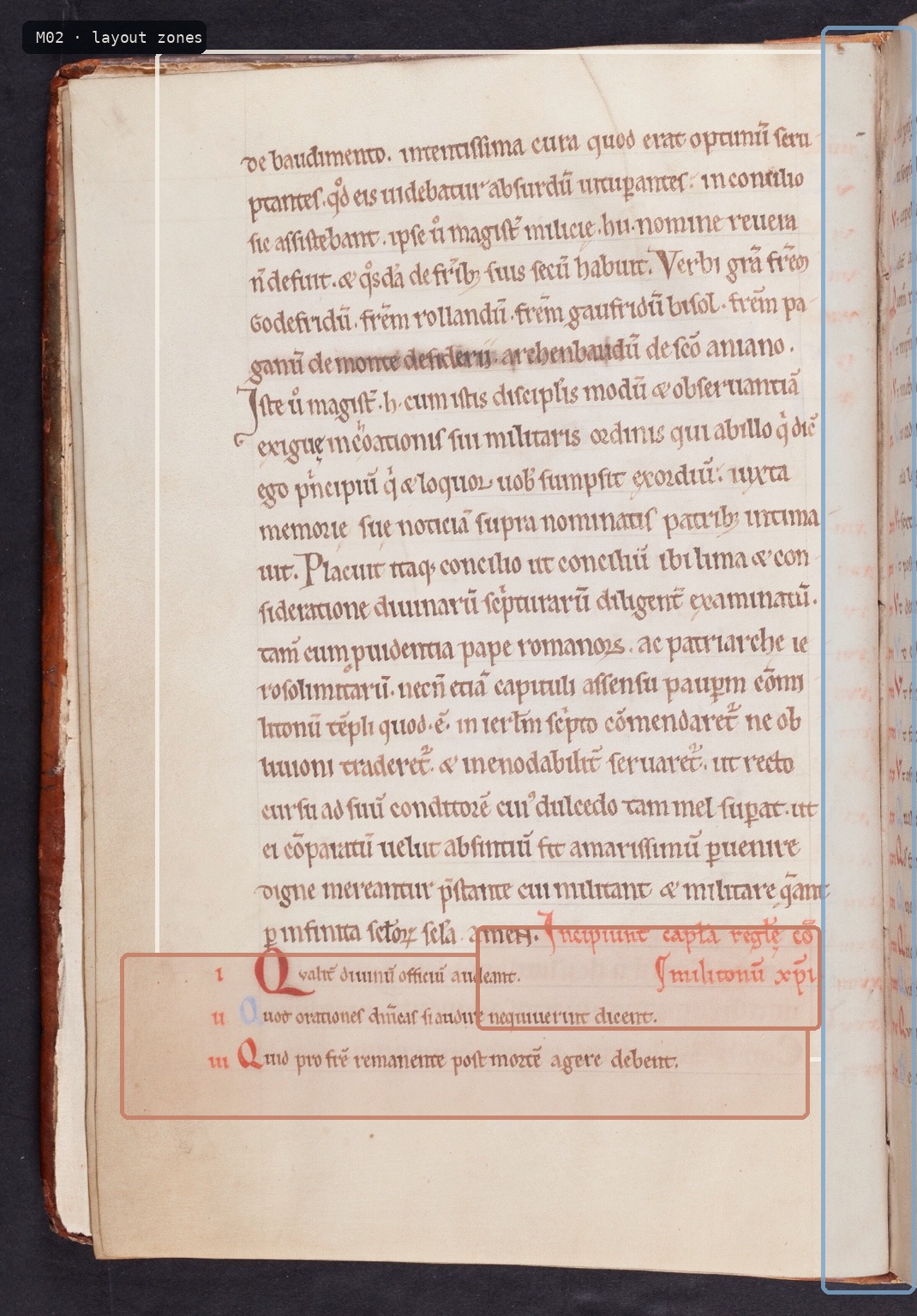
HistoriaMP examines historical handwriting with — source-bound, traceable and with visible .
No conventional OCR output: the platform connects , , abbreviations and quality control into a justified .
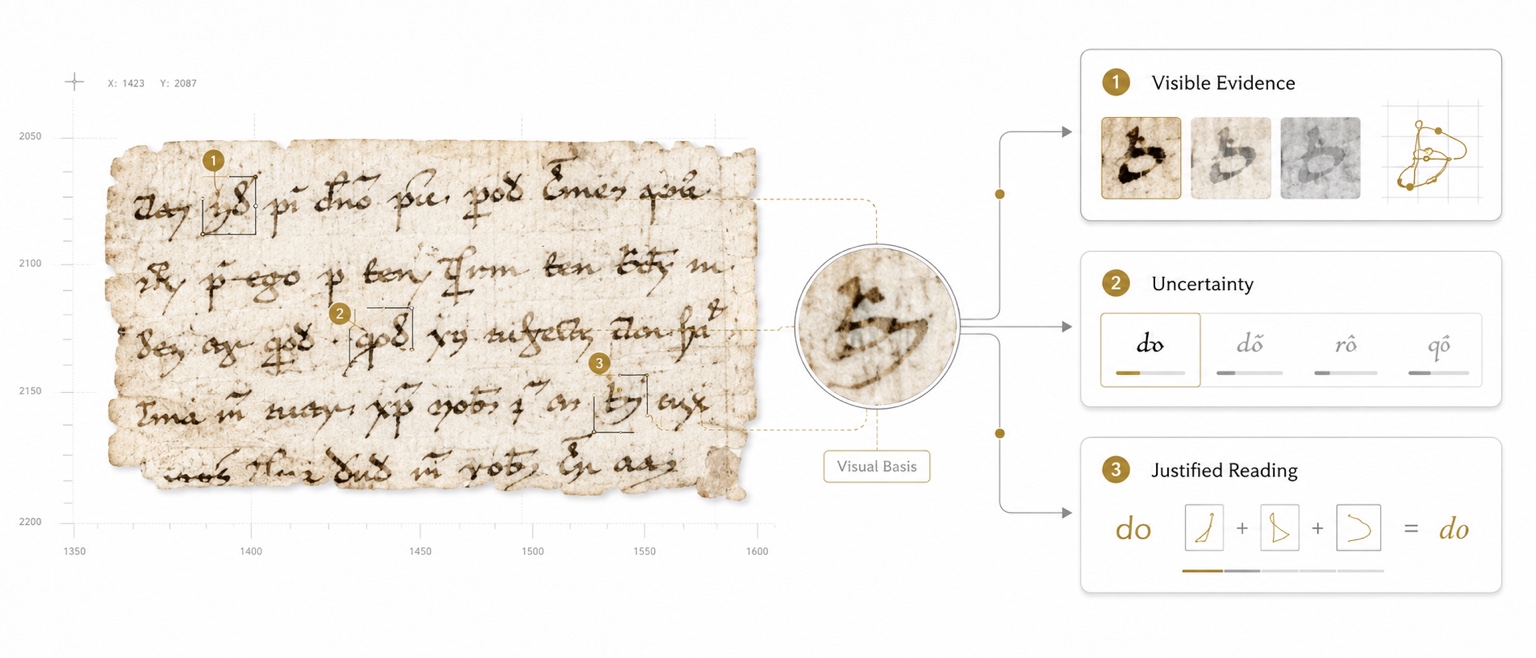
Image version, crop and visible areas are documented before a is created.
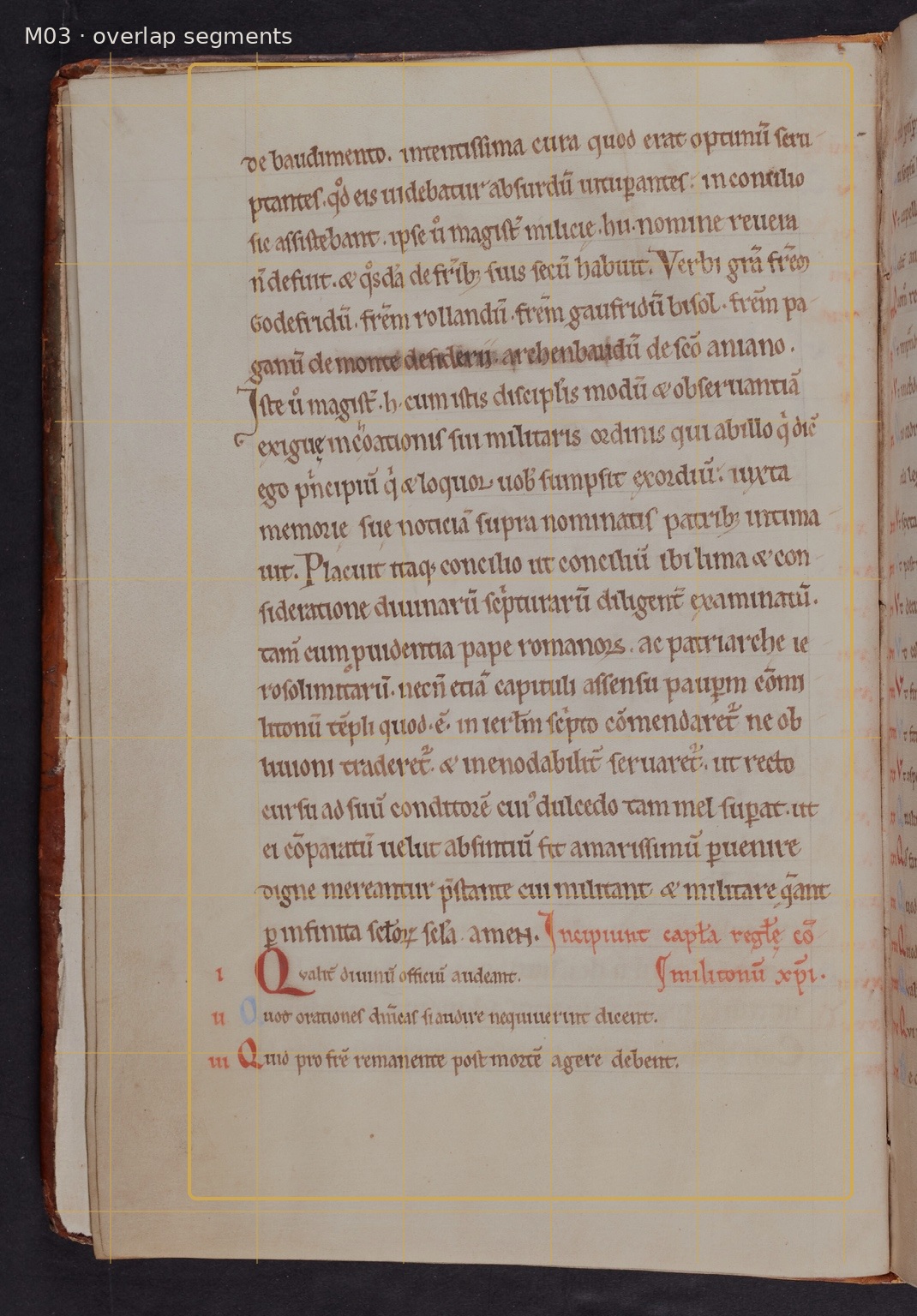
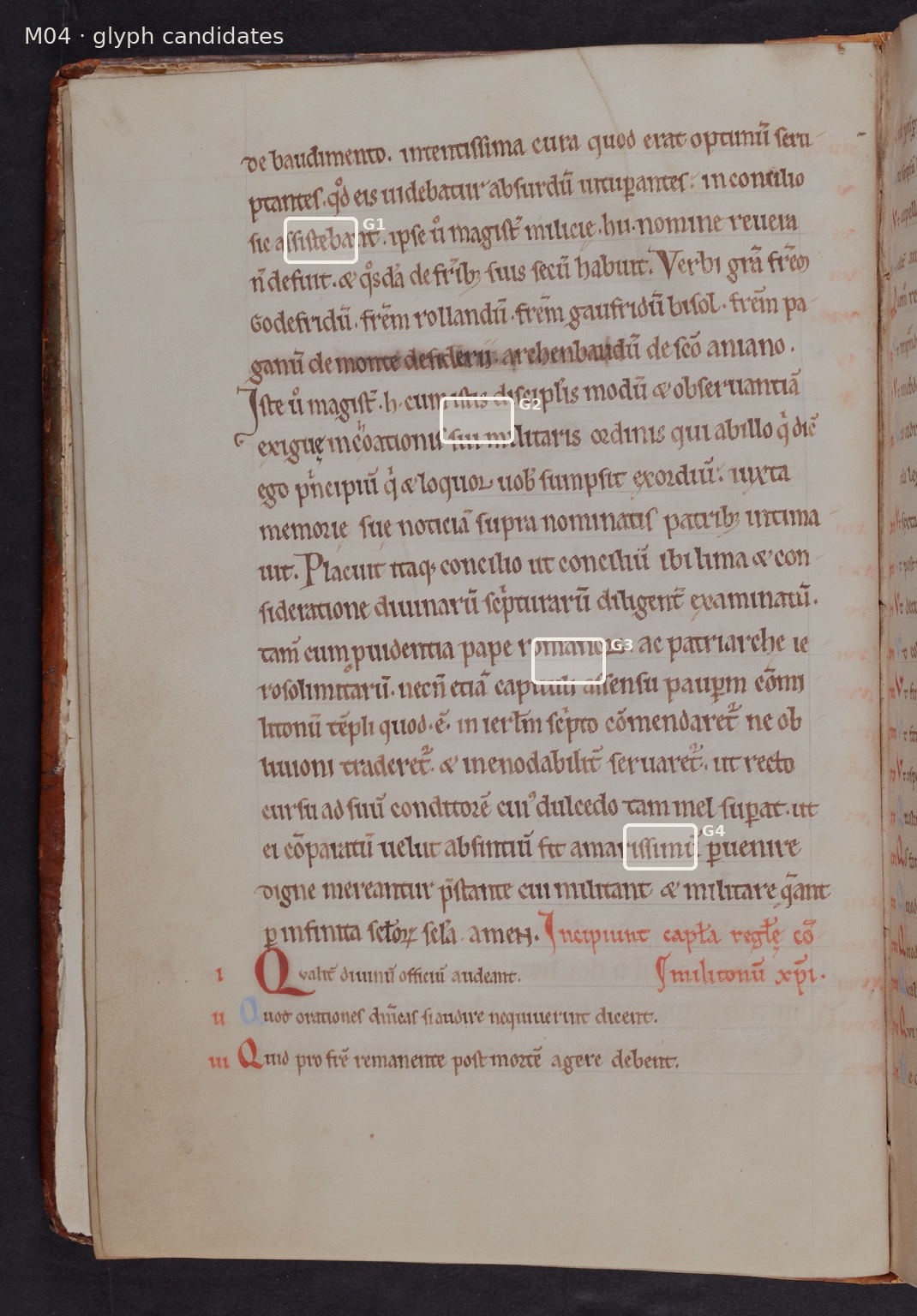
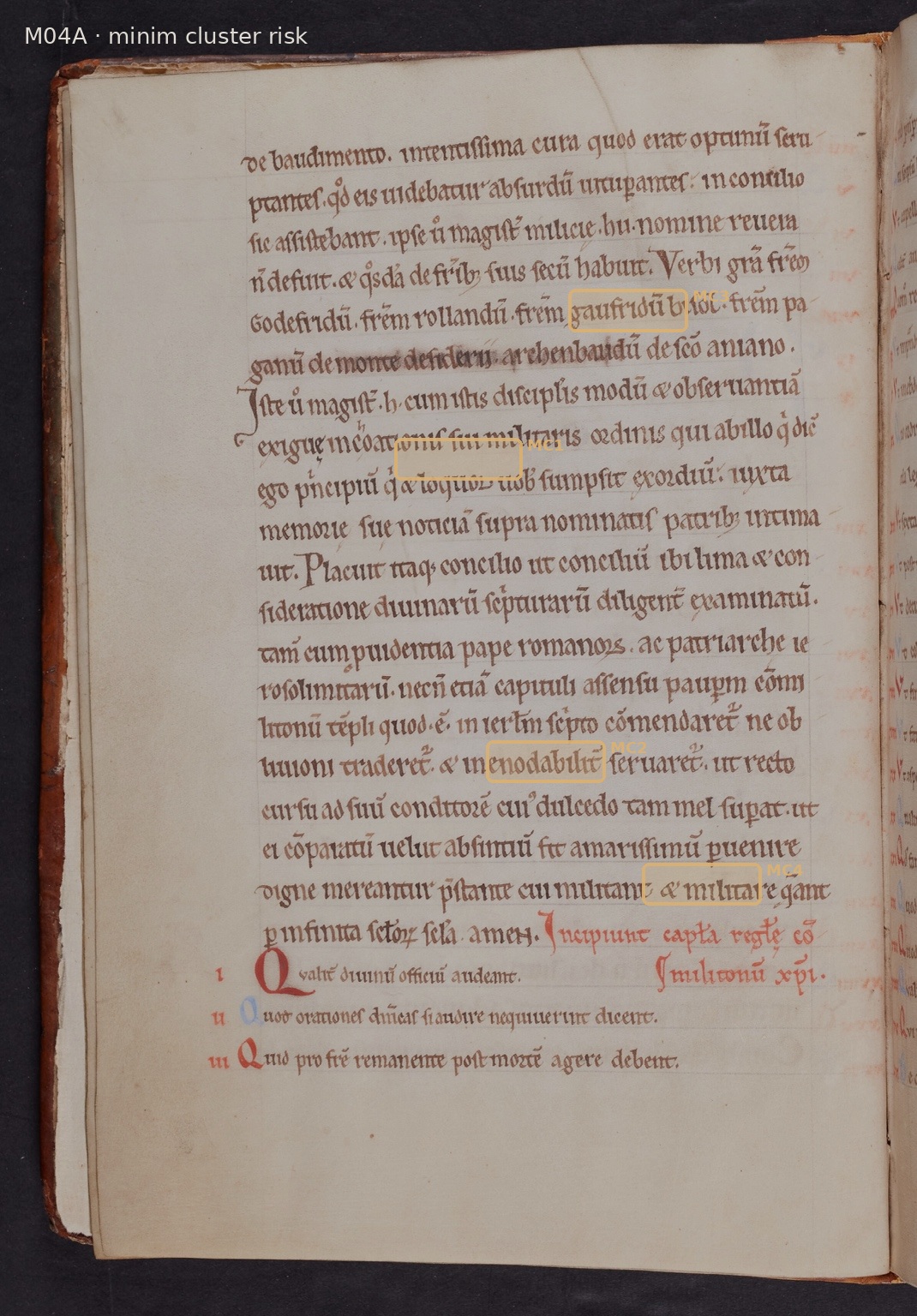
Layout, segments, , abbreviations and critical areas remain verifiable as .
Uncertain areas are marked. A reading is not smoothed, but traced back to visual evidence.
The following simulation is a deliberately simplified model. It does not show the complete real pipeline, but the basic principle: source image, module steps, artifacts, and quality control remain visible and verifiable.
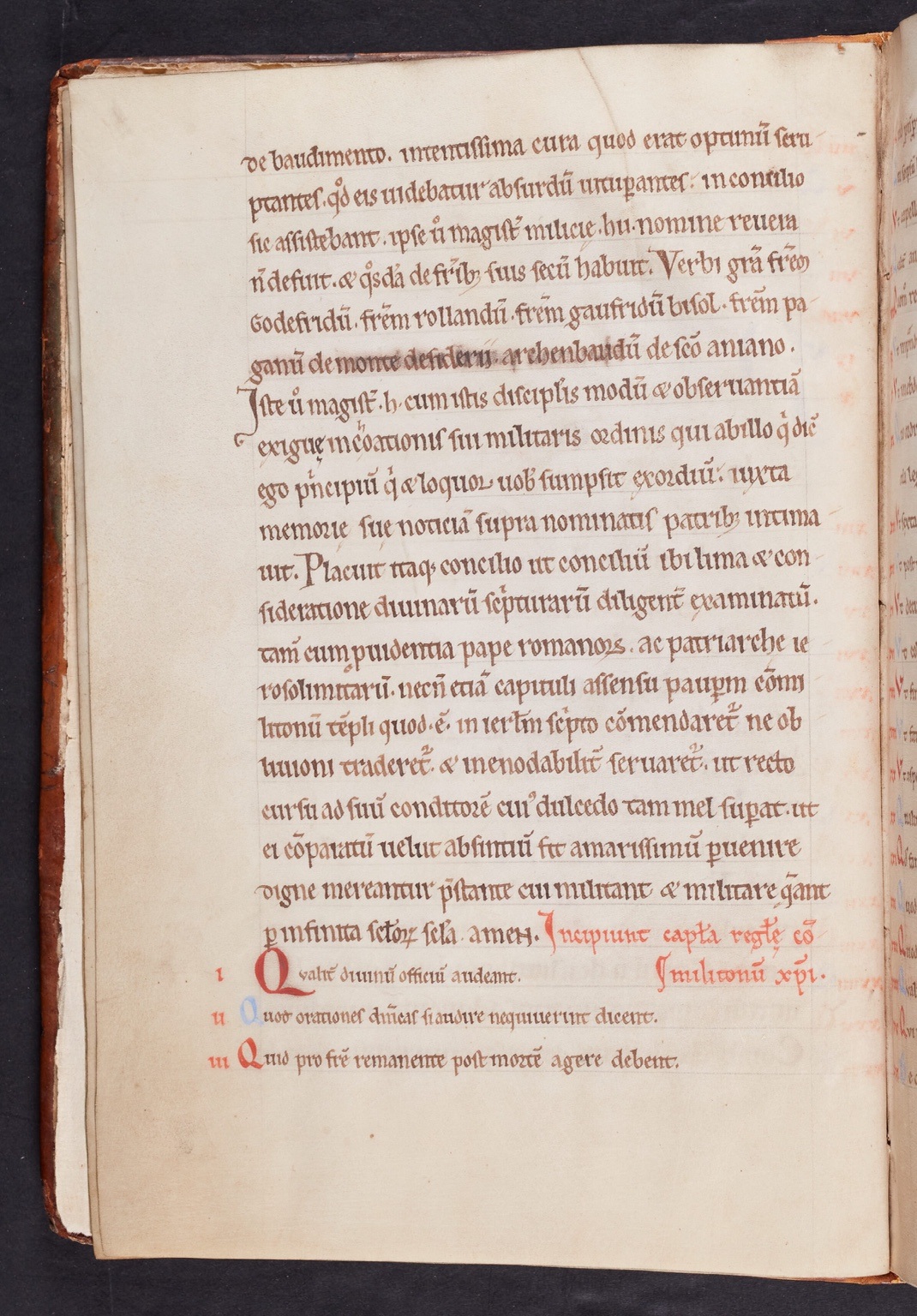
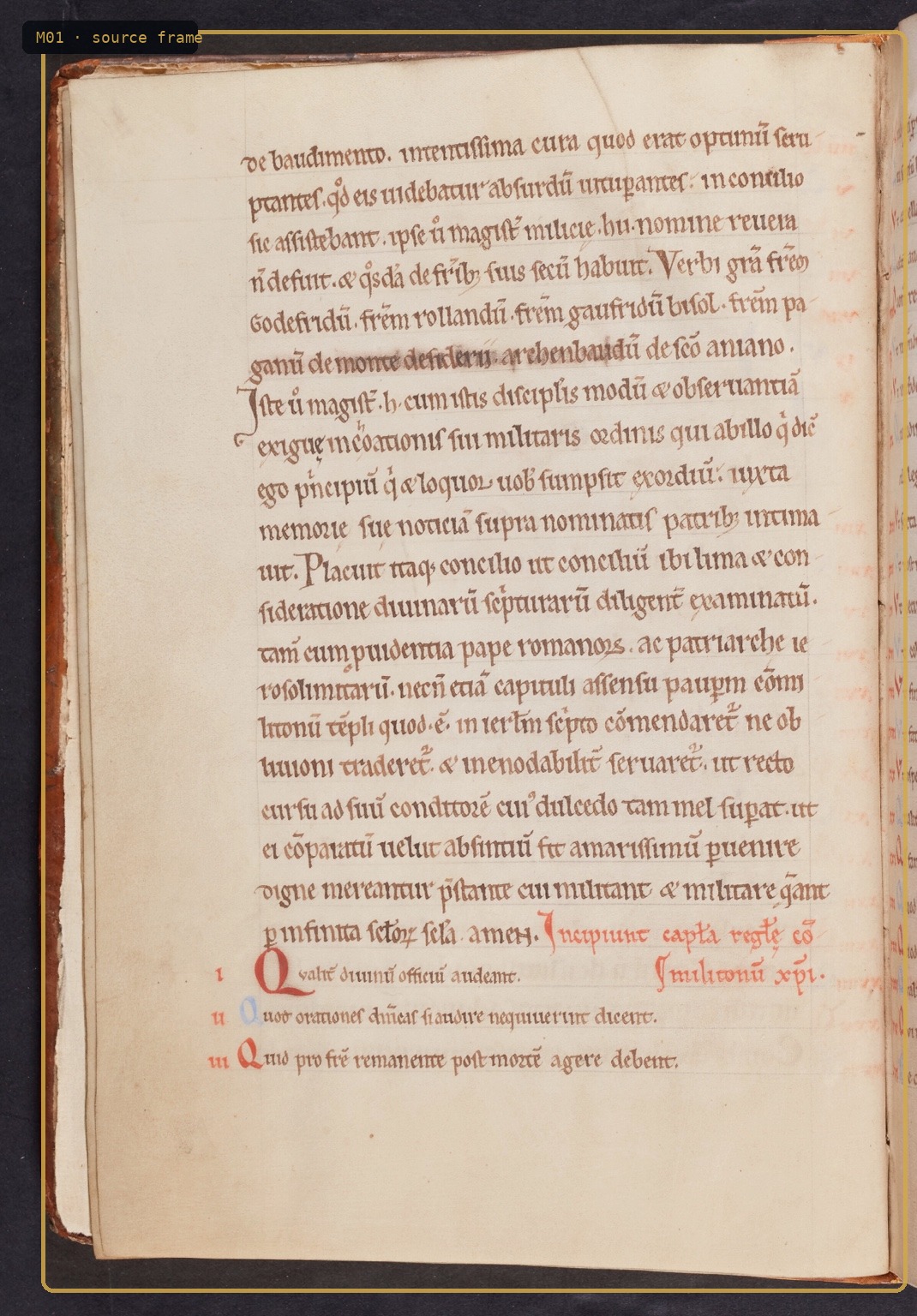
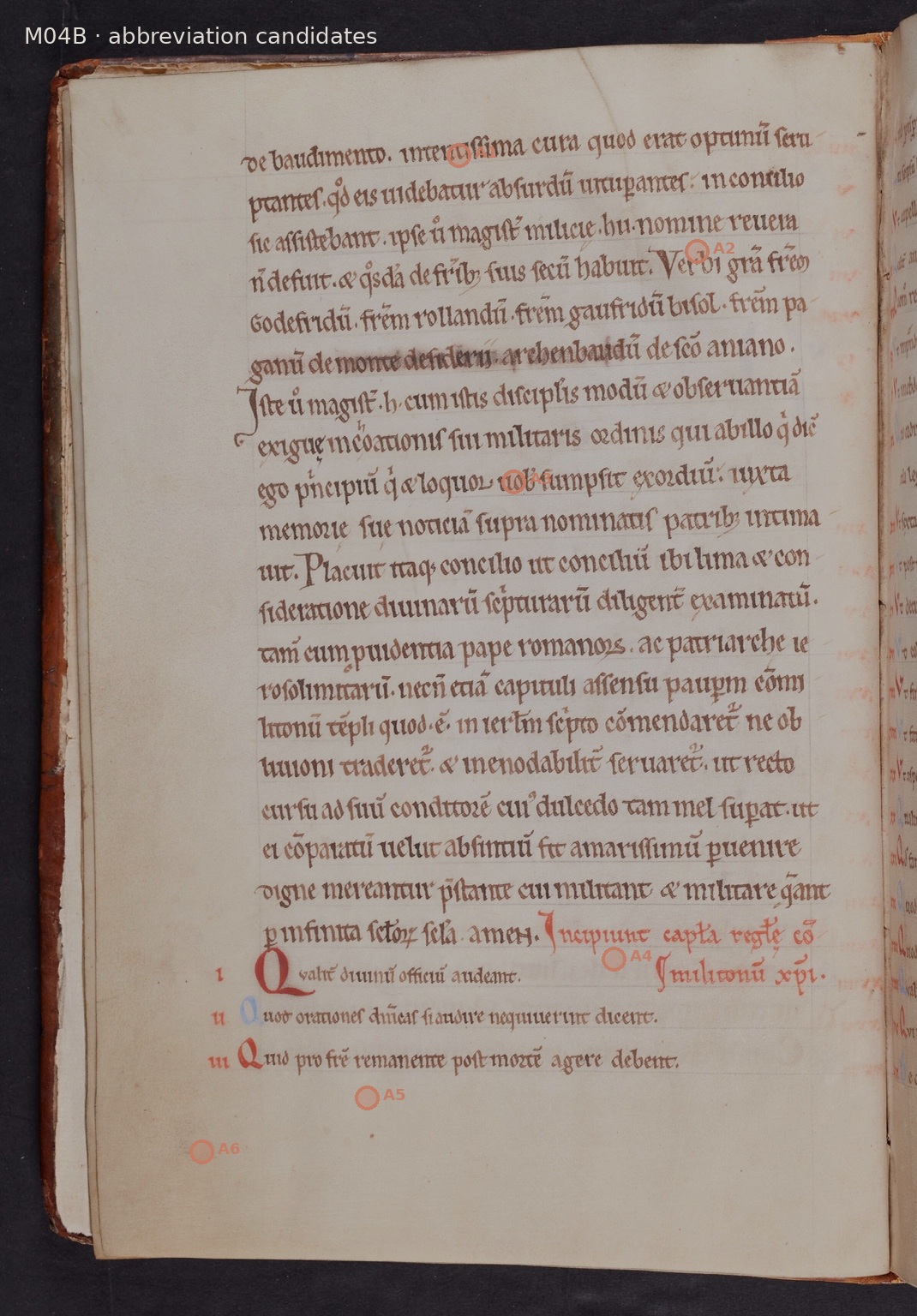
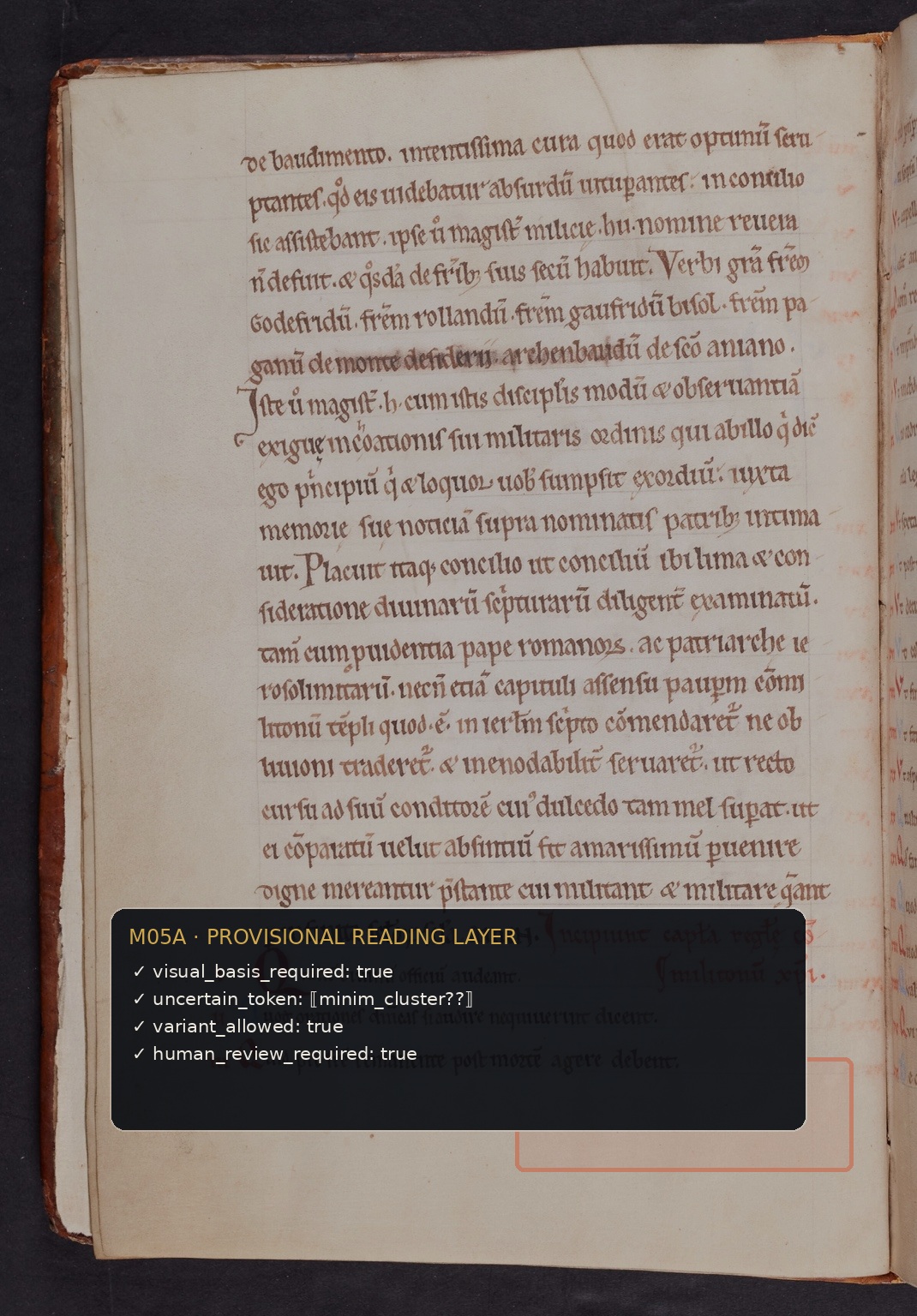
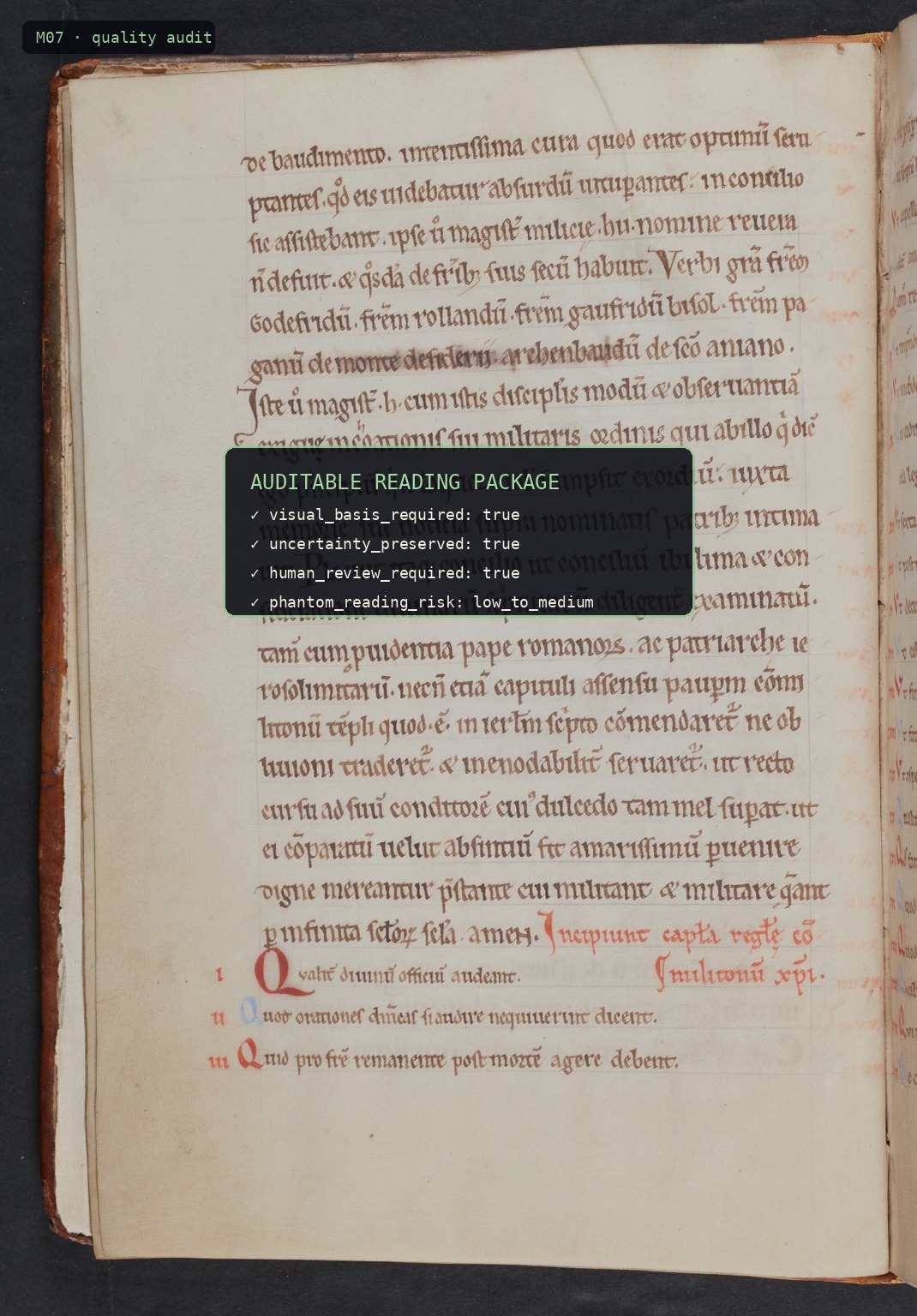
These pages explain HistoriaMP's method and pipeline.
Digital examines historical handwriting with digital methods. What matters is not only the text output, but the traceable connection to the visible .
No. HistoriaMP does not treat manuscripts as a simple OCR task. The platform documents analytical layers such as , layout, segment, , uncertainty and reading.
Uncertainty shows where a reading is not fully secured by the image evidence. This makes the analysis more verifiable and scientifically more robust.
and help with the digital encoding of historical characters. They do not replace analysis of the visible manuscript form.